
If you’ve never made a basil salt recipe at home, you’re in for one of those tiny kitchen wins that feels surprisingly luxurious. With just fresh basil, salt, and a few minutes of easy prep, you can make a deeply fragrant green seasoning that perks up everything from sliced tomatoes to roasted potatoes and simple buttered bread.
I love keeping a little jar of this in my kitchen because it turns ordinary meals into something that tastes thoughtful. It has that fresh, savory basil aroma you notice the second you open the jar, and it’s one of my favorite ways to use up a big bunch of basil before it fades in the fridge.
This version is intentionally simple and dependable. I’ll walk you through how to dry it enough for good storage, how to keep the color bright, and all the little ways you can use it once it’s ready.
Quick Recipe Info
| Prep time | 10 minutes |
| Cook time | 45 minutes |
| Total time | 55 minutes |
| Servings | 16 servings |
| Difficulty | Easy |
Why You’ll Love It
- It uses only a few ingredients and feels much more special than the effort suggests.
- The flavor is fresh, herbal, and savory without being complicated.
- It’s a smart way to preserve extra basil before it goes limp.
- You can sprinkle it on vegetables, eggs, chicken, pasta, popcorn, or even warm focaccia.
- It makes a lovely homemade food gift in a small jar.
- You can easily adjust the texture from coarse and rustic to fine and delicate.
Nutritional Benefits and Adaptable Variations
A simple way to add flavor
Fresh basil brings a lot of aroma and flavor with very little effort, which means a small pinch of this seasoning can make food taste brighter and more finished. Basil also naturally contains beneficial plant compounds, while the salt helps preserve the herb and distribute its flavor evenly. Since this is a seasoning, the serving size is small, and nutrition will vary based on how much you use.
Easy ways to change it
You can make this basil salt recipe your own in a few subtle ways. Try lemon zest for a citrusy lift, a small clove of garlic for a savory edge, or a mix of basil and parsley for a softer green herb profile. If you prefer a chunkier finishing salt, pulse it less. If you want something closer to a fine seasoning powder, grind it longer after drying. Just keep moisture in mind, since wetter add-ins can shorten storage life.
Ingredients
[INSERT INGREDIENT IMAGE HERE]
For the basil salt
- 2 packed cups fresh basil leaves, washed and thoroughly dried
- 1 cup coarse sea salt or kosher salt
Optional additions
- 1 teaspoon finely grated lemon zest
- 1 small garlic clove, minced very finely
I usually stick to just basil and salt for the cleanest flavor and best shelf life. If you add lemon zest or garlic, I recommend storing the finished salt especially carefully and making sure it is fully dried before sealing it in a jar.
Step-by-Step Instructions
- Wash the basil leaves if needed, then dry them extremely well. I mean really well. Pat them with towels and let them air-dry for a bit if necessary. Extra moisture is the main thing that can affect texture and storage.
- Add the basil leaves and salt to a food processor. If you are using lemon zest or garlic, add them now as well.
- Pulse until the mixture looks evenly combined and the basil is finely chopped into the salt. It should look damp, sandy, and vividly green.
- Spread the mixture in a thin, even layer on a parchment-lined baking sheet or a large plate if you plan to air-dry it.
- For oven drying, place the tray in a very low oven at 170°F or the lowest setting available for about 35 to 45 minutes. Stir once or twice so it dries evenly. The mixture should feel dry to the touch, not wet or clumpy.
- Let the basil salt cool completely. This matters more than it seems, because sealing warm seasoning in a jar can trap moisture.
- If you want a finer texture, pulse the cooled mixture once more in the food processor or grind it briefly in a spice grinder.
- Transfer to a clean, dry jar with a tight-fitting lid. Use it as a finishing salt on tomatoes, eggs, roasted vegetables, grilled chicken, pasta, or fresh mozzarella.
Tips, Serving Suggestions & Substitutions
Tip
The most important tip is to make sure the basil is completely dry before processing and the finished salt is fully dried before storing. That one detail gives you the best texture, color, and keeping quality.
Serving suggestions
I especially love this sprinkled over sliced tomatoes, fried or scrambled eggs, avocado toast, roasted zucchini, grilled corn, and buttery pasta. It’s also wonderful on warm bread with olive oil, or rubbed lightly onto chicken before roasting.
Substitutions
You can swap part of the basil with parsley, mint, or a little oregano for a different herb blend. If you only have fine salt, you can use it, but the finished texture will be less rustic and the seasoning may taste saltier by volume, so use a lighter hand when sprinkling.
Nutrition Information
| Calories | 18 | Carbohydrates | 1 g |
| Protein | 0.3 g | Fat | 0.1 g |
| Saturated fat | 0 g | Cholesterol | 0 mg |
| Sodium | 1730 mg | Fiber | 0.2 g |
| Sugar | 0.1 g |
Nutrition values are approximate estimates per serving and can vary based on the salt used and how generously you season your food.
Storage & Make-Ahead Tips
Storage: Keep the basil salt in a clean, airtight jar in a cool, dry place away from heat and steam. If it has been dried thoroughly, it should keep well for about 2 to 4 weeks at room temperature. For longer storage or if you added garlic or zest, refrigerate it.
Check before using: If the salt ever looks damp, clumps heavily, or smells less fresh and more musty than herbal, it’s best to discard it and make a new batch.
Make-ahead tip: You can prepare and dry the basil salt a day or two before gifting or serving. Just let it cool completely before jarring so condensation does not develop inside the container.
FAQ
Can I use dried basil instead of fresh basil?
You can, but the flavor will be different and less vibrant. This recipe is really designed for fresh basil because it creates that beautiful green color and fresher aroma.
What type of salt works best?
I prefer coarse sea salt or kosher salt because they blend well with the basil and give you a nice texture. Fine table salt can work, but it produces a denser, saltier-tasting result.
How do I keep the basil salt bright green?
Use fresh basil, dry it gently at a low temperature, and avoid overcooking it in the oven. The color will soften a bit as it dries, but low heat helps preserve that appealing green tone.
Can I make this without a food processor?
Yes. You can chop the basil very finely by hand and mix it with the salt, or use a mortar and pestle. The texture may be a little less even, but it still works well.
What foods taste best with basil salt?
It’s especially good on tomatoes, mozzarella, eggs, roasted potatoes, grilled vegetables, pasta, and chicken. I also love it on buttered toast when I want something simple but full of flavor.
Final Thoughts
I think this basil salt recipe is one of the easiest ways to make your everyday cooking feel more personal and flavorful. It’s simple, useful, and honestly a little bit charming sitting in a tiny jar on the counter. If you make it, I’d love to hear how you use it. Feel free to leave a comment, share the recipe with a basil-loving friend, and save it to Pinterest for later.
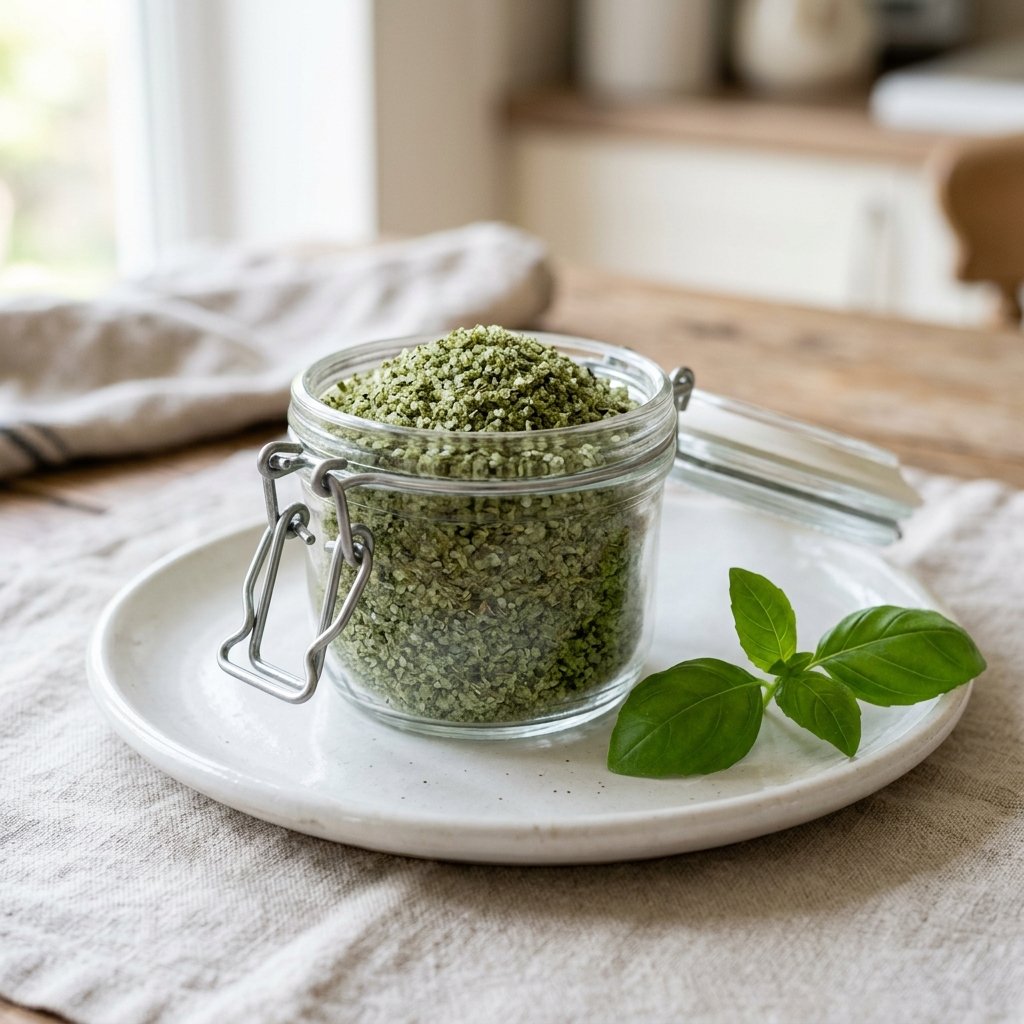
Basil Salt Recipe
Ingredients
Equipment
Method
- Wash the basil leaves if needed, then dry them extremely well with towels and air-dry briefly if necessary.
- Add the basil leaves and salt to a food processor. Add the lemon zest or garlic now if using.
- Pulse until the basil is finely chopped and evenly combined with the salt.
- Spread the mixture in a thin, even layer on a parchment-lined baking sheet or large plate.
- Dry in a 170°F oven, or the lowest setting available, for 35 to 45 minutes, stirring once or twice, until dry to the touch and no longer clumpy.
- Let the basil salt cool completely.
- For a finer texture, pulse the cooled mixture again briefly in the food processor or grind in a spice grinder.
- Transfer to a clean, dry airtight jar and use as a finishing salt.