
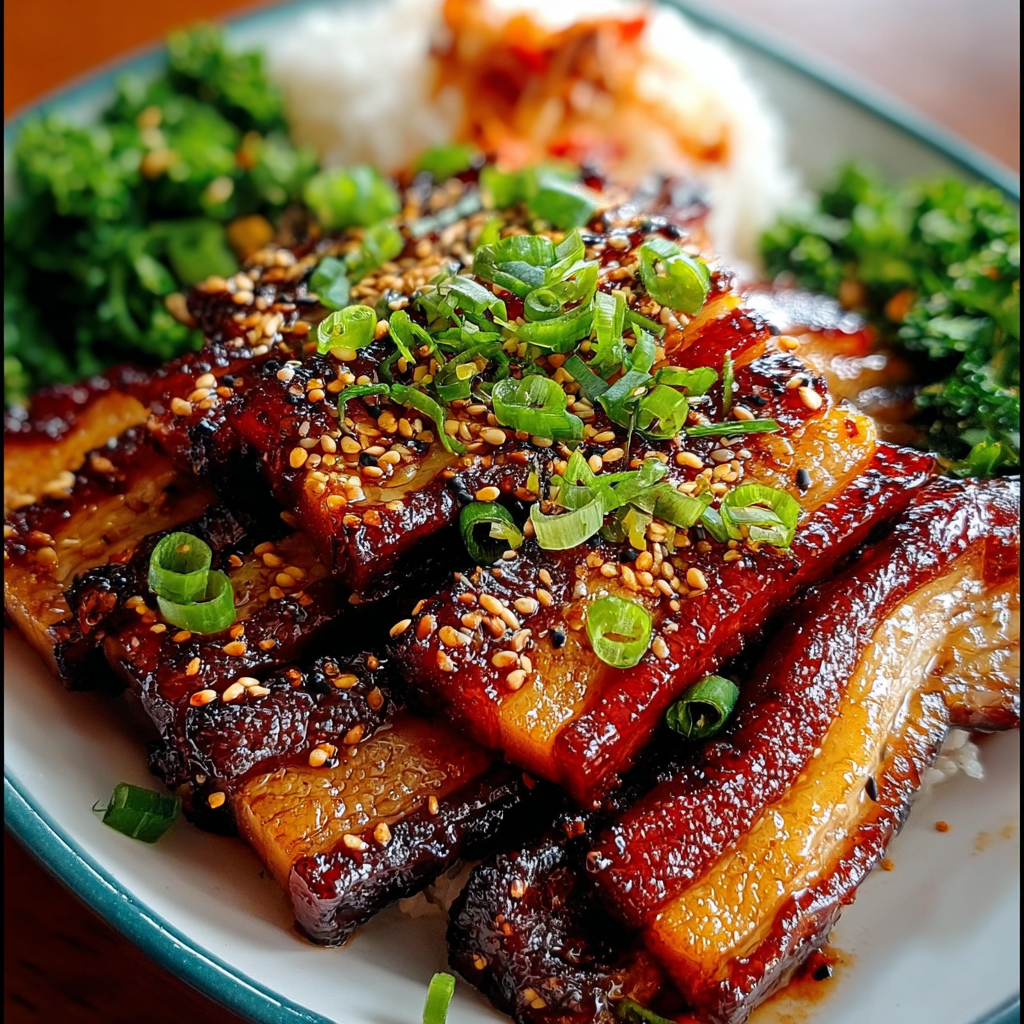
Hi there! Let’s Dive Into Delicious Korean Pork Belly
If you love bold flavors and crispy, juicy meat, I’ve got a treat for you—Korean pork belly that’s full of that amazing sweet, spicy, and savory punch. I absolutely adore this recipe because it’s simple to make but tastes like you spent hours in the kitchen. Trust me, once you make it, you’ll want it on repeat!
Why I Love This Korean Pork Belly
One of the coolest things about this recipe is how the marinade brings out rich flavors from ingredients like gochujang (which is a Korean chili paste), ginger, garlic, and soy sauce. When the pork cooks, it crisps up perfectly on the outside, with a sticky, caramelized glaze that’s just irresistible.
This dish is perfect for dinner, and you can serve it with rice, steamed veggies, or even in a lettuce wrap for a fun twist.
Nutritional Benefits
Pork belly is a cut of meat that’s known for its richness and fat content, which is why it’s so flavorful and tender. While it’s higher in fat, it also provides protein and important nutrients like B vitamins, zinc, and iron.
Using ingredients like garlic and ginger isn’t just for flavor—they have health benefits too! Garlic is known to boost your immune system, and ginger can aid digestion and calm inflammation. Plus, gochujang contains probiotics that are great for your gut health.
To balance the richness, I like serving this dish with a side of fresh veggies or a simple cucumber salad to add some crisp freshness and lighten things up.
Adaptable Variations You Can Try
- Make it Less Spicy: If you’re not big on heat, reduce the gochujang or skip the chili flakes altogether. You can add a bit more honey or brown sugar to keep it flavorful and sweet.
- Swap Pork for Chicken Thighs: Try using boneless chicken thighs cut into chunks for a leaner but still juicy alternative — the marinade works just as well!
- Make It Vegetarian-Friendly: Use thick slices of firm tofu or seitan. Marinate and cook in the same way—just be gentle when flipping tofu to keep it from breaking.
- Gluten-Free Version: Use tamari or coconut aminos instead of soy sauce to keep this recipe gluten-free without losing that umami flavor.
Here’s How to Make This Flavor-Packed Korean Pork Belly
Ingredients You’ll Need
- 1 lb pork belly, cut into thick chunks or slices
- 3-4 green onions (scallions), thinly sliced
- 1 tablespoon toasted sesame seeds
- 2 tablespoons soy sauce
- 1 tablespoon gochujang (Korean chili paste)
- 2 cloves garlic, minced
- 1 teaspoon fresh ginger, minced
- 1 tablespoon sesame oil
- 1-2 tablespoons brown sugar or honey
- 1 tablespoon rice wine or mirin
- 1/4 teaspoon black pepper
- 1 teaspoon vegetable oil (for cooking)
- Optional: chili flakes or Korean red pepper powder to taste
Step-by-Step Instructions
- Cut the pork belly into thick, bite-sized chunks or strips. This helps get that great crispy outside while keeping the inside juicy.
- In a mixing bowl, combine soy sauce, gochujang, minced garlic, minced ginger, sesame oil, brown sugar or honey, rice wine or mirin, black pepper, and if you want, a pinch of chili flakes. Stir well to create a delicious marinade.
- Toss the pork belly pieces in the marinade, making sure every piece is nicely coated. Let them soak up those flavors for at least 15 minutes. If you have more time, an hour makes it even better!
- Heat vegetable oil in a large skillet or pan over medium-high heat. Once hot, place the pork belly pieces carefully with space between so each piece can crisp up.
- Cook the pork for about 4-5 minutes on each side. Flip carefully to get all sides golden, crispy, and caramelized while ensuring the meat is cooked through.
- Turn the heat down a bit and pour any leftover marinade into the pan. Let the sauce cook and thicken for 1-2 minutes, coating the pork with a sticky, rich glaze.
- Transfer the pork belly to a serving plate, sprinkle generously with sliced green onions and toasted sesame seeds for a fresh crunch and nutty flavor.
- Serve immediately while it’s hot and enjoy the amazing flavors!
My Favorite Tips for Perfect Korean Pork Belly
- Don’t overcrowd the pan: Giving each piece enough room lets the pork crisp up instead of steaming.
- Use a heavy-bottom skillet: This helps with even heat distribution and better caramelization.
- Keep an eye on the heat: Medium-high is great for crisping, but you can lower it slightly if you feel the pork is browning too fast before cooking through.
- Extra crispy magic: After cooking, briefly broil the pork belly for 1-2 minutes if you want an extra crispy finish—just watch it so it doesn’t burn!
- Store leftovers properly: Place leftover pork belly in an airtight container and refrigerate. To reheat, warm it in a skillet to keep the edges crispy instead of microwaving.
Equipment You’ll Need
- Sharp knife and cutting board (for cutting the pork belly)
- Mixing bowl (for the marinade)
- Large skillet or frying pan (preferably non-stick or cast iron)
- Tongs or a spatula for turning pork pieces
- Measuring spoons and scales (to get those flavors right)
- Serving plate
Frequently Asked Questions
- What if I can’t find gochujang? You can substitute with a mix of chili paste and a bit of miso or soy sauce to get a similar flavor, but gochujang adds a unique depth worth trying to find.
- Can I use pork belly with skin on? Yes! Cooking with skin on will add a chewy, crispy texture, but make sure to crisp it well and slice thinly after cooking.
- How long should I marinate the pork? At least 15 minutes is good for flavor, but 1 hour or even overnight in the fridge helps the pork soak up the sauce deeply.
- Can I make this recipe in the oven? Absolutely! You can roast pork belly chunks at 400°F (200°C) for about 25-30 minutes, flipping halfway, then brush on the marinade sauce and broil briefly for caramelizing.
- What sides go well with Korean pork belly? This tastes amazing with steamed rice, kimchi, pickled veggies, or wrapped in lettuce leaves with a bit of garlic and ssamjang (Korean dipping sauce).
Give It a Try—Your Taste Buds Will Thank You!
I really hope you try this fantastic Korean pork belly recipe soon—it’s one of those dishes that makes weeknights feel special and your dinner table come alive with flavor. If you give it a go, please come back and tell me how it turned out! And hey, if you want easy access to this recipe and more goodies like it, hop over to my Pinterest page and follow along. Happy cooking, and enjoy every crispy, juicy bite!